15 Best Drought Tolerant Plants for Central Florida Landscapes
Central Florida homeowners can reduce their landscape water usage by up to 30% by incorporating drought tolerant plants florida gardens and common areas. With the region’s dry season stretching from November through May, selecting plants that naturally thrive in low-water conditions makes both environmental and economic sense.
Drought tolerant plants florida landscapes offer multiple benefits beyond water conservation. These hardy species require less maintenance, resist disease better, and maintain their appearance through seasonal weather variations. For HOA communities and commercial properties, this translates to lower irrigation costs and more consistent curb appeal year-round.
Understanding Central Florida’s Water Challenges
Central Florida’s climate creates unique challenges for landscape maintenance. The region experiences distinct wet and dry seasons, with rainfall concentrated between June and October. During the dry months, landscapes depend heavily on professional irrigation systems to maintain healthy plant growth.
Sandy soils common throughout Polk, Lake, and Orange Counties drain quickly, making water retention difficult. Traditional landscapes with non-native plants often require daily irrigation during dry periods, driving up water bills and stressing municipal water supplies.
Drought tolerant plants florida species have evolved to handle these conditions naturally. Their deep root systems, waxy leaves, or water-storing capabilities allow them to survive and thrive with minimal supplemental watering once established.
Top Drought Tolerant Plants for Central Florida
The following native and adapted plants perform exceptionally well in Central Florida’s climate while requiring minimal water once established. Each offers unique benefits for residential and commercial landscapes.
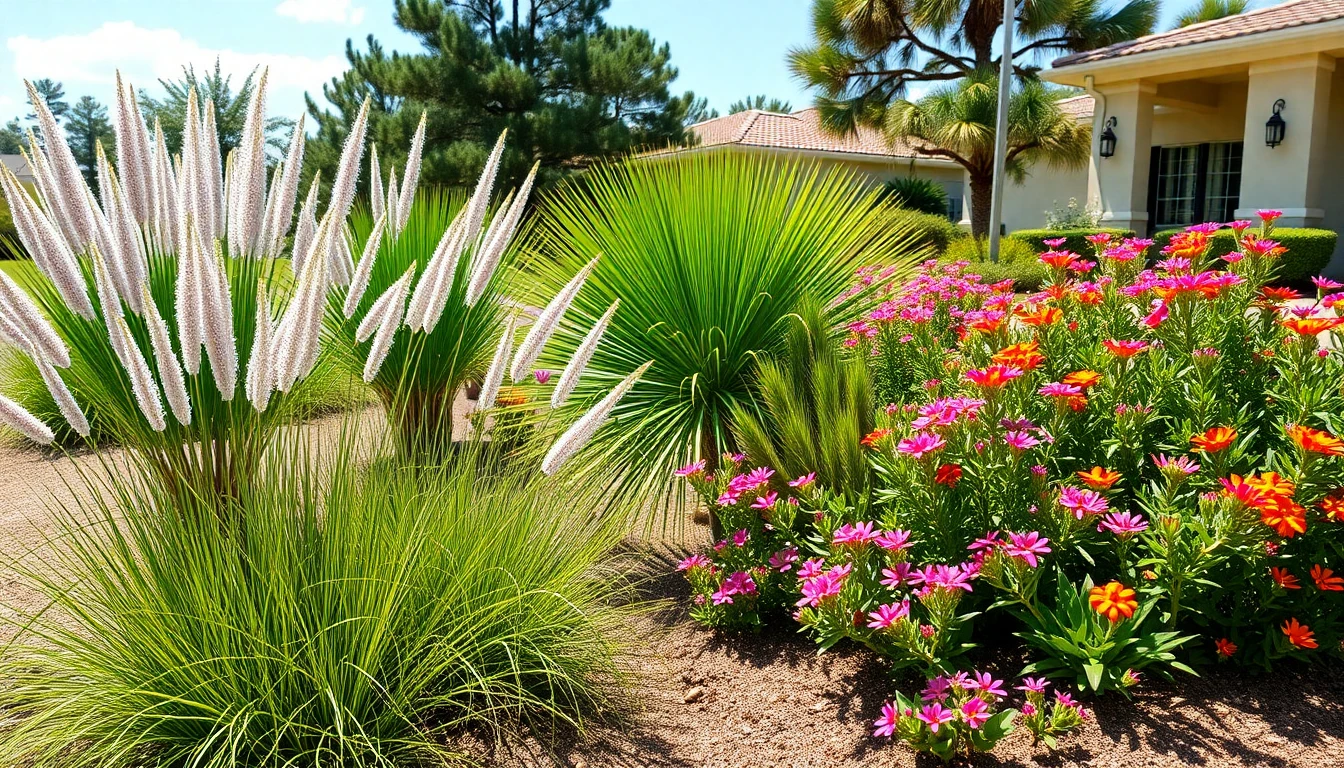
Muhly Grass (Muhlenbergia capillaris) produces stunning pink plumes in fall and requires virtually no irrigation after the first year. This ornamental grass works perfectly as a border plant or mass planting in HOA entrance areas.
Coontie (Zamia integrifolia) serves as Florida’s only native cycad and tolerates deep shade to full sun conditions. Its prehistoric appearance adds unique texture to landscape beds while requiring water only during extended dry periods.
Firebush (Hamelia patens) attracts butterflies and hummingbirds while producing orange-red tubular flowers year-round. This fast-growing shrub handles drought conditions exceptionally well and provides excellent screening for property boundaries.
| Plant Name | Sun Requirements | Water Needs | Best Use |
|---|---|---|---|
| Muhly Grass | Full sun to partial shade | Low after establishment | Borders, mass plantings |
| Coontie | Full sun to full shade | Very low | Foundation plantings, shade areas |
| Firebush | Full sun to partial shade | Low to moderate | Screening, wildlife gardens |
| Simpson’s Stopper | Full sun to partial shade | Low | Hedges, specimen plants |
| Lantana | Full sun | Very low | Ground cover, color beds |
| Saw Palmetto | Full sun to partial shade | Very low | Natural areas, barriers |
| Fakahatchee Grass | Full sun to partial shade | Low | Accent plantings, containers |
Native Plants vs. Adapted Species
Native drought tolerant plants florida ecosystems developed over thousands of years, making them perfectly suited to local conditions. These plants support local wildlife, require no fertilizer, and resist pests naturally. Examples include Saw Palmetto, Coontie, and Wild Coffee.
Adapted species come from similar climates worldwide and perform well in Central Florida with minimal care. Plants like Lantana (from tropical Americas) and certain ornamental grasses thrive here while offering different aesthetic options than natives provide.
Both categories work well in drought tolerant designs. The key is selecting plants appropriate for specific site conditions including sun exposure, soil type, and intended function in the landscape. Professional landscape designers can help balance native and adapted species for optimal results.
For HOA communities looking to reduce maintenance costs while maintaining attractive common areas, our landscape design and installation services can create water-wise plantings that meet community standards and architectural guidelines.
Common Mistakes When Choosing Drought Tolerant Plants
- Overwatering during establishment: Even drought tolerant plants need regular water for the first 6-12 months while root systems develop. However, many homeowners continue daily watering beyond this period, which can actually weaken plants and encourage shallow root growth.
- Ignoring microclimates: Placing sun-loving plants in shaded areas or shade plants in full sun reduces their drought tolerance significantly. Each plant has specific light requirements that must be matched to the planting location.
- Poor soil preparation: Central Florida’s sandy soil drains quickly, but adding organic matter helps retain some moisture and nutrients. Skipping soil amendments forces plants to work harder during dry periods.
- Mixing water needs incorrectly: Combining high-water and low-water plants in the same irrigation zone creates maintenance problems. Group plants with similar water requirements together for efficient irrigation management.
- Expecting immediate drought tolerance: Newly planted specimens need time to develop extensive root systems. Planning for 12-18 months of establishment care prevents plant loss during their first dry season.
- Forgetting seasonal water adjustments: Even drought tolerant landscapes need more water during establishment and extreme heat periods. Completely eliminating irrigation can stress plants beyond their tolerance limits.
Designing with Drought Tolerant Plants
Successful drought tolerant landscaping requires thoughtful design that considers plant placement, groupings, and maintenance access. Start by identifying the driest areas of your property, typically south and west-facing slopes or areas with poor soil drainage.
Layer plants by height and water needs, placing the most drought tolerant species in the most challenging locations. Use taller shrubs like Firebush or Simpson’s Stopper as background plants, with ornamental grasses and ground covers in front. This creates visual depth while ensuring each plant receives appropriate care.
Mulching around drought tolerant plants helps retain soil moisture and suppress weeds. Use 2-3 inches of organic mulch, keeping it away from plant stems to prevent moisture-related diseases. Pine straw works particularly well in Central Florida landscapes and breaks down slowly.
Florida-Friendly Landscaping Principles
The Florida-Friendly Landscaping Program promotes sustainable landscape practices that protect natural resources while maintaining attractive outdoor spaces. Drought tolerant plants florida gardens align perfectly with these principles by reducing water consumption and chemical inputs.
Right plant, right place represents the program’s core concept. This means selecting plants adapted to specific site conditions rather than trying to modify environments to suit particular plants. Drought tolerant species naturally fit this approach by thriving in existing conditions.
Water efficiency becomes achievable when landscapes feature plants that match natural rainfall patterns. During Central Florida’s wet season, properly selected drought tolerant plants may need no supplemental irrigation. Even during dry periods, water requirements remain minimal compared to traditional landscape plants.
For communities interested in implementing Florida-Friendly principles across common areas and entrance landscaping, our HOA and commercial landscaping services include design consultation and plant selection guidance that meets both aesthetic and sustainability goals.
Maintenance Tips for Drought Tolerant Landscapes
Proper maintenance keeps drought tolerant plants looking their best while maximizing water conservation benefits. During the establishment period, water deeply but less frequently to encourage deep root development. This typically means watering 2-3 times per week rather than daily light applications.
Pruning requirements vary by species but generally remain minimal for most drought tolerant plants. Remove dead or damaged material as needed, and shape plants during their dormant season. Over-pruning can stress plants and reduce their drought tolerance. For larger maintenance needs or specialized care, our comprehensive lawn maintenance services can help keep your drought-resistant landscape thriving throughout the year.
Fertilization needs are typically lower for drought tolerant species, especially natives. A light application of balanced fertilizer in early spring provides adequate nutrition for most plants. Avoid high-nitrogen fertilizers that promote excessive growth and increase water demands.
Tip: Monitor plants during their first summer for signs of stress such as wilting, leaf drop, or color changes. Even drought tolerant plants may need supplemental water during extreme heat or extended dry periods until fully established.
Most drought tolerant plants require 6-12 months to develop sufficient root systems for true drought tolerance in Central Florida. During this establishment period, regular watering helps plants develop deep roots. After the first year, most species can survive on natural rainfall except during extreme drought conditions.
Yes, gradual conversion works well and spreads costs over time. Start with the most challenging areas like south-facing slopes or spots with poor soil drainage. Replace plants as they naturally decline or during landscape renovation projects. This approach allows you to learn about plant performance before making larger investments.
Native drought tolerant plants typically attract beneficial wildlife including birds, butterflies, and pollinators. Plants like Firebush draw hummingbirds, while Coontie supports butterfly larvae. This increased wildlife activity is generally considered beneficial, though some homeowners may prefer less active landscapes in certain areas.
Water savings depend on your current landscape and irrigation practices, but properly designed drought tolerant landscapes can reduce outdoor water use by 20-50%. The EPA estimates that outdoor water use accounts for 30% of total household consumption, making landscape changes particularly impactful for water bills.
Most HOAs support water-wise landscaping when properly designed and maintained. Present plans that show how drought tolerant plants will maintain community aesthetics while reducing maintenance costs. Many HOAs are actively encouraging Florida-Friendly landscaping practices to reduce common area maintenance expenses.
Fall through early spring (October through March) provides ideal planting conditions for drought tolerant plants in Central Florida. This timing allows plants to establish root systems during cooler, wetter months before facing their first summer heat. Avoid planting during peak summer months when establishment stress is highest.