
Builder-Grade Landscaping Fixes for Horizon West: 3 Upgrades Without a Full Redesign
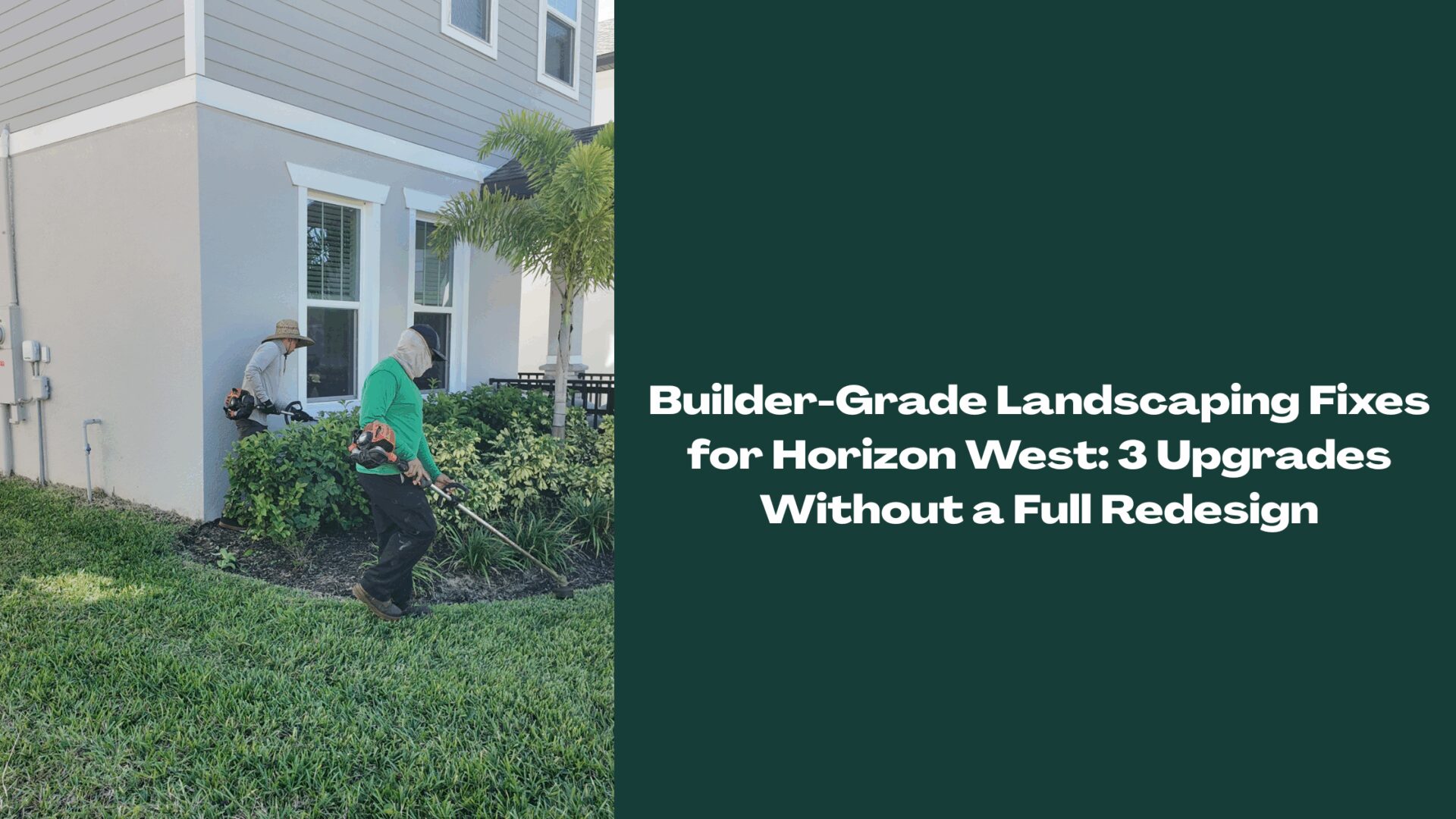
Moving into a newly built home in Horizon West is exciting—until you realize the landscaping often feels a little… unfinished. Most new builds come with “builder-grade” landscaping: a basic lawn, a few foundation shrubs, and beds that blend into the yard without much definition.
The good news: you don’t need a full redesign to make your yard look intentional. With a few targeted upgrades, you can create clean lines, better color, and a finished look that holds up in Central Florida weather and HOA standards.
If you want the bigger picture on maintenance, irrigation, lighting, and design support in the area, start here: Horizon West landscaping services. And if you’re ready for quick wins, these three upgrades deliver the best curb-appeal boost for the least disruption.
Why Builder-Grade Landscaping Looks Unfinished in Horizon West
Builder-grade landscaping isn’t “bad”—it’s just minimal. Builders are trying to meet basic requirements efficiently, which usually means:
- Beds are small and shallow, so plants look sparse and temporary
- No strong edging or bed lines, so mulch spreads and turf creeps into beds
- Shrubs are often planted in a straight row, creating a flat, one-layer look
- Irrigation is functional but rarely tuned, so new plantings struggle and lawns get dry strips
- Lighting is missing, which makes the front of the home look dark at night—even in a nice community
In Horizon West, where curb appeal matters and neighborhoods are full of new homes, small upgrades go a long way. The goal isn’t “more plants.” The goal is definition, structure, and consistency.
Upgrade #1: Bed Definition + Clean Edges That Stay Crisp
If you do one thing, do this one. Clean bed lines instantly make a yard look more finished, and it’s usually the difference between “builder-basic” and “professionally maintained.”
What bed definition actually means
Bed definition is the combination of:
- a clear bed shape (not a wavy, accidental line),
- a consistent edge that holds,
- and a mulch surface that looks clean instead of thin and patchy.
Natural edge vs. metal edging (what holds up in Florida)
Both can work well, but they serve different goals:
Natural edge (cut edge):
- Looks clean and premium when maintained
- Easy to adjust over time
- Requires periodic re-cutting to stay sharp
Metal edging (steel/aluminum):
- Holds shape longer
- Helps prevent turf creep into beds
- Great for simple geometric bed shapes
- Can get hit by mowers if not installed flush
For many Horizon West homes, a well-cut natural edge + a clean mulch refresh is the fastest “wow” upgrade. If you want longer intervals between touch-ups, metal edging can be a smart add—especially around mailbox beds, walkway borders, and tight foundation beds.
The “two-line” bed shape that makes homes look more expensive
One of the most common builder-grade problems is beds that hug the foundation too tightly. A quick improvement is using a two-line approach:
- A wider, gentle curve that gives plants breathing room
- A secondary definition line near the entry/walkway to create structure
This adds depth without needing dozens of plants. It also gives you space for the next upgrade: layered planting.
Pro tip: If your bed is too narrow, shrubs get trimmed into tight balls to “fit,” which makes everything look chopped. A little more bed width reduces future maintenance headaches.
Upgrade #2: A Simple “Layered” Planting Plan (Without Constant Trimming)
A row of shrubs can look tidy… or it can look flat and generic. The easiest way to make builder-grade landscaping look custom is a three-layer planting plan.
The three layers (simple and effective)
- Back layer: 2–3 taller anchor plants (not too close to the house)
- Mid layer: flowering or textured shrubs that add color/interest
- Front layer: low plants/groundcover for a finished edge
This is the quickest way to turn “green line of shrubs” into a designed bed.
What to plant for sun vs. shade on typical Horizon West lots
Most front yards in Horizon West get significant sun, but entry areas and side beds may get mixed shade. The right plant selection reduces maintenance and keeps things looking full.
For sunny spots: focus on heat-tolerant, Florida-friendly plants that don’t require constant shaping.
For shaded entry areas: choose plants that stay full without stretching or thinning.
(If you want help building the right plan for your exact exposure and HOA rules, this is where a professional consult pays off—see Landscape Design & Installation)
How to avoid the “green meatball” shrub look
The “meatball” look usually happens for two reasons:
- The bed is too narrow, so everything gets pruned to fit
- The plants chosen want to grow larger than the space allows
Instead:
- Use plants that naturally match the bed width
- Give shrubs room and prune for shape, not size control
- Mix textures (leaf sizes and colors) so the bed doesn’t look like one blob
A simple layer plan means you can prune less often—and still look better.
Upgrade #3: Landscape Lighting for Instant Nighttime Curb Appeal
This is the upgrade most homeowners overlook—and it’s often the most dramatic.
Landscape lighting makes a home feel more finished because it:
- highlights architectural features,
- improves visibility and safety,
- and adds a premium look after sunset.
In a neighborhood with similar home styles, lighting is a fast differentiator.
Where lighting makes the biggest difference
Start with the areas that create the strongest “arrival” feel:
- Entry + walkway lighting: practical and welcoming
- Uplighting palms or feature trees: makes landscaping look intentional
- Accent lighting on key bed areas: adds depth at night
- Driveway edge or mailbox lighting (where allowed): improves visibility
If you’re considering lighting, use a professional plan to avoid glare and “spotty” coverage. You can learn more about options here: Landscape Lighting.
Low-voltage vs. solar (what lasts longer here)
Solar lights can work for small accents, but in Central Florida they often fade in performance due to:
- inconsistent charging during cloudy stretches,
- cheaper fixture seals and moisture intrusion,
- and dim output over time.
Low-voltage lighting typically gives more reliable brightness and longer life when installed correctly. If you want lighting that stays consistent season after season, low-voltage is usually the better investment.
Bonus: Quick Irrigation Check So Your Upgrades Don’t Fail
Nothing kills curb appeal faster than new plants struggling or sod edges drying out—especially after you’ve just upgraded your beds.
Before or right after you add new plantings and refresh beds, do a quick irrigation check:
- Run each zone and watch for coverage gaps
- Look for overspray hitting sidewalks or the house
- Check for misting/fogging (often a pressure issue)
- Confirm heads aren’t buried, tilted, or blocked by plants
- Make sure the schedule matches the season (don’t water like July in cooler months)
If you suspect coverage problems, it’s worth having a professional inspect the system so you don’t waste money on plants that never establish properly. Start here: Irrigation Install & Repair.
Ready for a Finished Look? Get a Quote in Horizon West
If your yard feels builder-basic and you want a clean, finished look without a full redesign, Florida Landscape Co. can help you prioritize the upgrades that make the biggest impact.
Call us today at (863) 582-2168 or visit our Horizon West professional landscaping page for full services.
FAQ: Builder-Grade Landscaping Fixes in Horizon West
Clean bed edges and refreshed mulch are the fastest visual upgrade. Strong bed definition makes the entire yard look more finished immediately.
Mulch helps with moisture retention and temperature control, but it may need periodic refreshing. Decorative rock can be lower-maintenance in certain areas, but it needs proper underlayment and edging to prevent weeds and migration.
Choose plants that naturally fit the space and avoid over-planting tight beds. A layered plan with the right spacing reduces pruning needs while improving the look.
Yes—especially at night. Lighting adds depth, improves visibility, and makes entry areas feel more polished and welcoming.