
Central Florida HOA Landscaping: Annual Scope Checklist for Boards
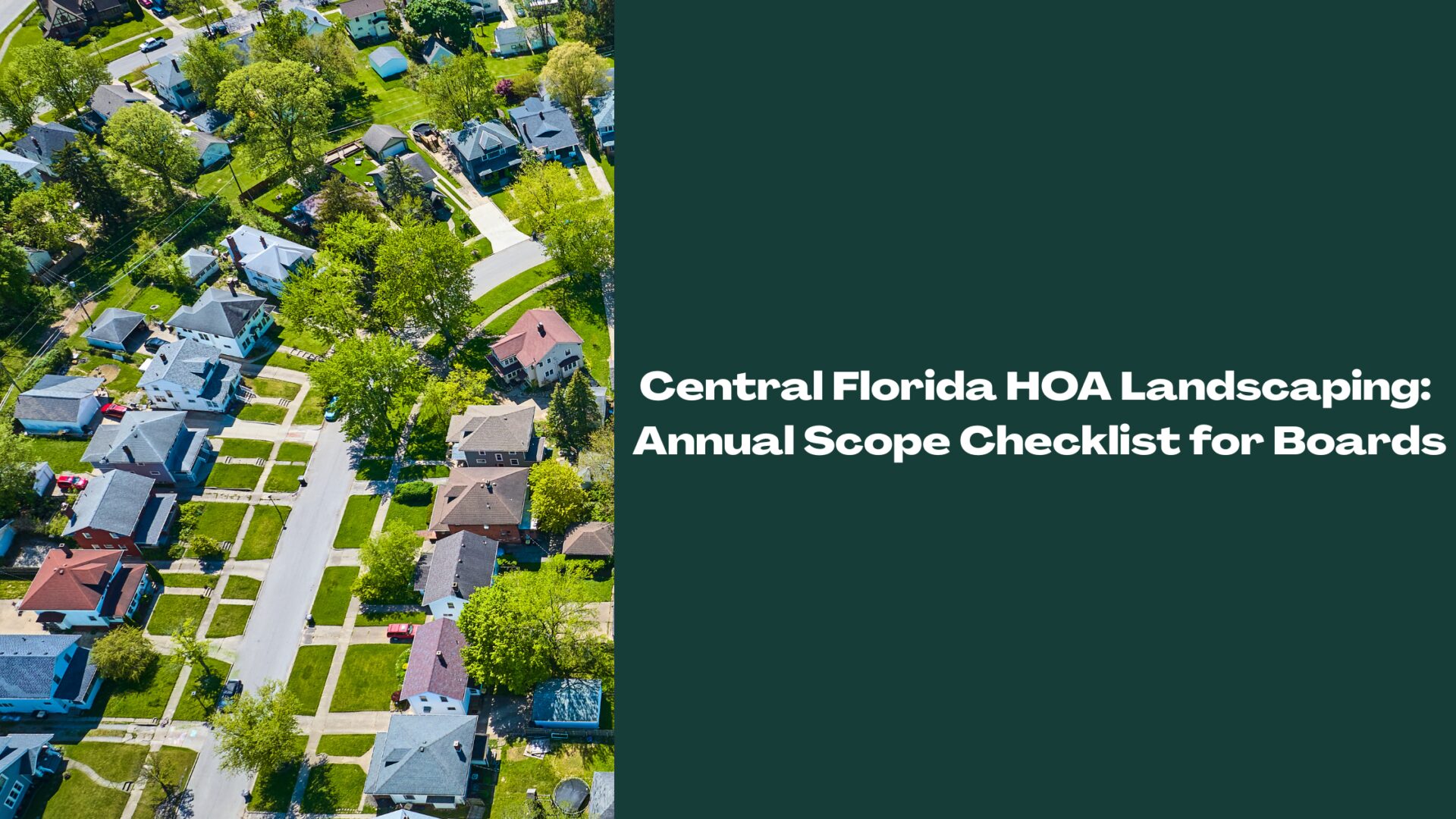
If you’re responsible for Central Florida HOA landscaping, an “as-needed” approach usually turns into higher costs, resident complaints, and missed storm-season prep. This annual scope checklist helps boards and community managers set clear expectations, plan the year, and hold vendors accountable—without overpaying for things you don’t need.
If you want a broader overview first, start with our guide to Central Florida HOA landscaping and then come back to this annual checklist to build your scope.
Why an annual scope matters for HOAs in Central Florida
Central Florida communities (Davenport, Clermont, Four Corners, Horizon West, Winter Garden and nearby areas) deal with:
- Long growing seasons (meaning mowing and weeds don’t “pause” for very long)
- Heavy summer rain (fungus, runoff, drainage issues)
- Heat and sandy soil (irrigation efficiency and plant stress)
- Hurricane season risks (tree failures, blocked drains, broken irrigation)
A documented annual scope keeps your vendor aligned, supports budgeting, and prevents the “we thought that was included” problem that drives change orders.
Annual HOA landscaping scope checklist (by season)
Spring (March–May): Reset, refresh, and inspect
Spring is your best window to catch issues before summer growth and storms.
Turf & beds
- First full property walkthrough (turf thinning, bare areas, drainage spots)
- Edge and define beds; refresh bed lines if they’ve “crept”
- Spot weed pressure mapping (so you’re not guessing later)
Irrigation
- Full system check and coverage test (heads, nozzles, pressure, leaks)
- Controller review and seasonal adjustments
If you want a simple benchmark for what “good” looks like, use this Central Florida irrigation system checklist.
Palms, shrubs, and trees
- Selective pruning (structure, clearance, deadwood removal)
- Identify high-risk limbs and trees early (before summer storms)
Mulch / seasonal color
- Mulch refresh (as needed) and plan seasonal plant rotation
Summer (June–September): Growth control & storm readiness
Summer is where HOAs either look great…or quickly look chaotic. The goal is consistency and storm prep.
Weekly/bi-weekly maintenance (typical needs)
- Mowing, edging, trimming, and blowing (frequency based on growth & rainfall)
- Bed weed control and bed touch-ups
- Litter/debris pickup (especially after storms)
Irrigation & dry spot management
- Mid-season inspection for coverage gaps and broken heads
- Run-time adjustments during heavy rain and heat swings
If you’re seeing brown patches, these are usually irrigation-related—this guide on sprinkler system dry spots in Central Florida is a helpful reference for what to check first.
Storm-season tree work (do this early)
- Clearance pruning away from roofs, sidewalks, and sightlines
- Remove deadwood and obvious hazards
For timing and what’s safe to prune, see the best time for tree trimming in Central Florida and your storm checklist in how HOAs can deal with storm season landscaping in Central Florida.
Drainage and common area checks
- Ensure swales, drains, and culverts aren’t blocked by clippings or debris
- Spot low areas that consistently hold water
Fall (October–November): Repair, reduce risk, and plan the next year
Fall is where you “fix the summer” and prep the property for a cleaner winter look.
Turf and beds
- Repair worn or thin turf areas (especially high-traffic common spaces)
- Bed redefinition and weed cleanup
- Trim back overgrowth on walkways and signage
Irrigation
- Audit water efficiency and adjust schedules as conditions change
If you want the “why” behind seasonal changes, this post on signs your irrigation system needs adjustment before Florida’s dry season is a solid reference.
Trees
- Post-storm assessment: broken limbs, canopy imbalance, cracked unions
- Plan any larger removals or structural pruning for appropriate timing
Budget planning
- Review service levels vs. pain points (resident feedback and site notes)
- Line-item next year’s scope and identify optional add-ons
Winter (December–February): Detail work and long-term improvements
Winter is where HOAs can tackle detail work that gets ignored during peak growth.
Detail cleanup
- Prune ornamental shrubs (shape and health—no “meatballing”)
- Refresh bed presentation and remove dead plant material
- Hardscape cleanup (common areas, sidewalks, entrances)
Irrigation
- Quick tune-ups and efficiency checks
This winter irrigation tune-up guide for Davenport is a good seasonal reference even if you’re outside Davenport.
Planning projects
- Landscape upgrades, irrigation improvements, lighting, or renovation planning
- Vendor review and RFP prep for renewals
What to include in your HOA landscaping contract (so it matches the scope)
A strong scope isn’t just a checklist—it’s language in a contract that reduces surprises.
Include:
- Service frequency by season (not one flat schedule all year)
- Clear definitions (what counts as “pruning,” “mulch refresh,” “weed control,” etc.)
- Irrigation responsibilities (who repairs, who diagnoses, what’s included)
- Storm response terms (how quickly debris removal happens, pricing triggers)
- Reporting cadence (monthly property notes and photo documentation)
If you’re building or renewing a contract, use this HOA landscaping RFP checklist for Davenport and pair it with guidance on comparing landscaping proposals for HOA and commercial properties.
Budgeting: where HOAs overspend (and where they shouldn’t cut)
Many HOAs overspend because the scope is vague—then they pay change orders all year.
Common overspends
- “Unlimited” pruning without a plan (leads to overcut shrubs and constant rework)
- Reactive irrigation repairs instead of simple seasonal inspections
- Storm-season tree work done too late (emergency pricing and resident risk)
Smart investments
- Seasonal irrigation inspections (prevents recurring dry spots)
- Early storm-season clearance pruning (reduces risk and emergency work)
- Consistent bed weed control (cheaper than total bed resets)
For a practical budgeting framework, see HOA landscaping budgeting tips for property managers in Davenport, Haines City, and Four Corners.
When your HOA should call in a pro (instead of adding “one more task”)
If you’re seeing any of these, your current scope is probably missing key line items:
- Chronic brown areas or “mystery” dry spots (often coverage/pressure issues)
- Shrubs constantly scalped or misshaped
- Trees encroaching on roofs, sidewalks, or street signs
- Bed weeds returning within weeks
- Residents complaining after every storm due to debris and downed limbs
If you need a vendor who can handle HOA-scale needs, start here: HOA & commercial landscaping services. If you’d rather talk through your property’s annual scope first, reach out via the contact page.
Central Florida HOA Landscaping FAQs
Most communities need weekly mowing during peak growth (summer) and may scale back during slower growth periods. Frequency should be seasonal, not static.
At minimum: mowing/edging/trimming, bed weed control, debris pickup, and a defined plan for pruning, irrigation checks, and seasonal enhancements.
Sometimes—but it’s often vague. Your contract should specify whether irrigation is maintenance-only, repairs included, or billed separately. This irrigation efficiency guide for Central Florida can help you set expectations.
Focus on clearance, deadwood removal, and hazard reduction—early. Use this tree trimming timing guide for Central Florida so you’re not scrambling mid-season.
Compare scope details line-by-line (frequency, inclusions, exclusions, reporting, storm response). This guide on how to compare landscaping proposals for HOA and commercial properties is built for that.
Ready to build your HOA’s annual scope?
If you want, I can turn this into a one-page scope template you can paste directly into an HOA contract. Or, if you’re ready to get a quote, start with our HOA & commercial landscaping services and reach out through the contact page, to schedule a free walkthrough call (863) 582-2168 today.