
Sprinkler System Repair—The 5 Most Common Causes of Dry Spots in Central Florida
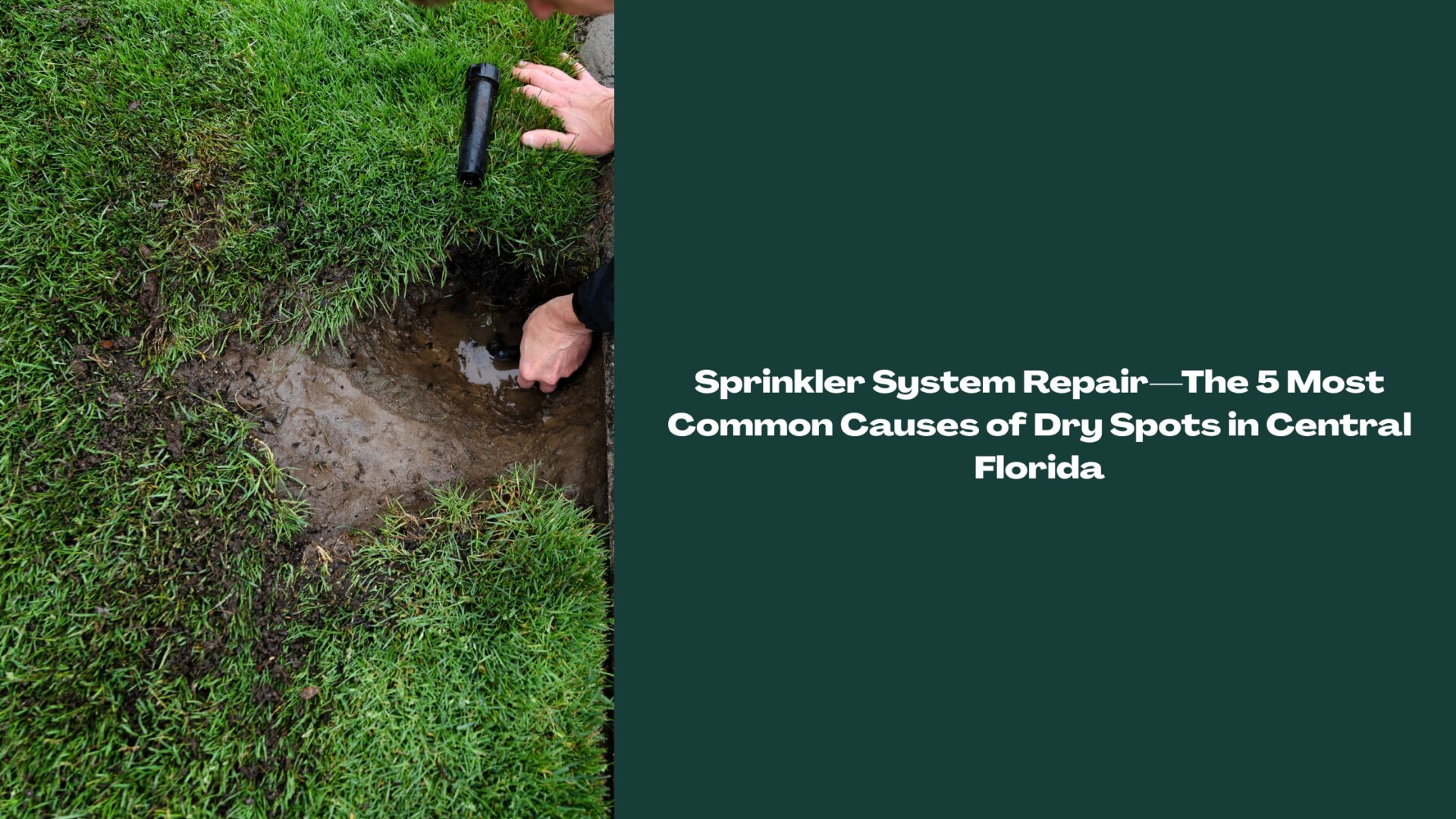
If you’re dealing with dry patches in the middle of an otherwise green lawn, sprinkler system repair is often the fastest way to fix the problem—before you waste water (and money) trying to “water harder.” If you want a pro to pinpoint the issue quickly, start with our irrigation installation & repair services and we’ll help you get every zone watering evenly again.
In Central Florida, dry spots are common because of sandy soil, intense sun, and fast-growing turf. The good news: most causes are easy to identify once you know what to look for.
Below are the five most common sprinkler problems that create dry spots—plus what you can safely do yourself and when it’s time to call in help.
Quick 5-Minute Dry Spot Check (Before You Replace Anything)
Before you assume it’s the grass, run this quick test:
- Run each zone for 2–3 minutes and watch coverage
- Look for spray hitting sidewalks, walls, or fences (wasted water)
- Check if any heads are not popping up fully
- Note whether dry spots are perfect circles (usually a head issue) or random streaks (often pressure/coverage)
- Make sure the timer isn’t skipping days or starting at odd times
If something looks off, it usually points to one of the issues below.
1) Clogged Nozzles or Filters
What it looks like
- A sprinkler head pops up, but the spray is weak
- The pattern is uneven or “spitty”
- One area stays dry even though the zone runs normally
Why it happens in Central Florida
Sand, sediment, and debris can clog nozzles—especially after heavy rain, construction nearby, or a well-water system.
What you can do
- Turn off the zone
- Unscrew the nozzle and rinse it out
- Clean or replace the small filter screen (if your head uses one)
When to call a pro
If the clog keeps coming back, you may have a bigger issue like sediment in the line or a failing component upstream.
2) Misaligned, Sunken, or Broken Sprinkler Heads
What it looks like
- A dry spot shaped like a half-moon or wedge
- Spray shoots into the air, or straight into a wall
- Water pools around a head (classic break or seal failure)
Common causes
- Mowers/edgers bumping heads
- Settling soil after installation
- Foot traffic around beds and corners
What you can do
- Adjust the arc/direction so it hits the turf (not the driveway)
- Raise sunken heads to the correct height
- Replace cracked heads (often inexpensive and quick)
When to call a pro
If multiple heads in the same zone are failing, it may be pressure-related—or the zone may have been installed with the wrong head types.
3) Low Water Pressure (or Pressure Loss From a Leak)
What it looks like
- Heads barely pop up
- Spray distance is much shorter than normal
- Coverage looks “lazy” across the entire zone
Why it matters
Low pressure means the lawn isn’t getting enough water where it needs it—creating dry spots that don’t improve even if you increase run time.
What you can do
- Check if any other water use is happening (showers, laundry, hose)
- Confirm the main shutoff and backflow valve are fully open
- Run the zone and look for soggy areas or bubbling (sign of a leak)
When to call a pro
If you suspect an underground leak, don’t ignore it. Leaks can waste a lot of water and undermine the soil, which can create bigger landscape problems.
4) Zone Valve or Solenoid Problems (The Zone Isn’t Fully Opening)
What it looks like
- One zone is consistently weak while others are fine
- The zone turns on, but performance is poor
- The zone turns off late, early, or inconsistently
What’s happening
A valve that’s not opening fully restricts water flow, causing weak pressure and patchy coverage—especially at the far end of the line.
What you can do
- Make sure the valve box isn’t flooded or packed with debris
- Listen for clicking or buzzing when the zone starts
- If you’re comfortable, confirm wiring connections are secure
When to call a pro
Valve diagnostics can get technical quickly. A repair tech can test electrical signal, water flow, and valve function without guesswork.
5) Coverage Gaps (Design Issues, Wrong Nozzles, or Bad Spacing)
What it looks like
- Dry spots always appear in the same areas
- Corners dry out first
- You have green “stripes” and brown “stripes” after mowing
Why it happens
Sometimes the system is working—but the coverage pattern is wrong. Common causes include:
- Heads spaced too far apart
- Incorrect nozzle type (spray vs rotor mismatch)
- Incorrect arc settings (e.g., corner heads set too narrow)
- Shrubs/palms blocking spray
What you can do
- Watch the zone and see where water is not reaching
- Trim back plants blocking spray
- Swap to a more appropriate nozzle (matched precipitation helps)
When to call a pro
If the system needs head relocation, re-nozzling across a zone, or adjustments for slope/drainage, a professional tune-up usually saves you time and water.
What NOT to Do When You See Dry Spots
These “quick fixes” often make the problem worse:
- Don’t crank up run time without checking coverage first
- Don’t aim one head across the yard to compensate for another that’s failing
- Don’t mix head types (rotors + sprays) in the same zone unless it’s designed that way
- Don’t ignore soggy areas—they can signal leaks causing pressure loss elsewhere
Dry spots are usually a distribution problem, not a “your lawn needs more water” problem.
When Dry Spots Aren’t the Sprinklers
Sometimes irrigation is fine and the lawn is fighting something else, like:
- Compacted soil (high traffic areas)
- Grubs or fungus
- New sod not rooted evenly
- Shade changes from growing trees
A proper irrigation inspection helps you confirm whether it’s a watering issue—or something else (and if ongoing turf issues are the bigger culprit, consistent lawn maintenance services can help keep problems from stacking up).
Need Help Diagnosing Dry Spots in Central Florida?
If you’re tired of guessing, we can inspect your zones, pressure, and coverage and recommend the most efficient fix. Call (863) 582-2168 or Request a quote today.