Hurricane Season Tree Trimming in Central Florida: What to Prune and What Not to Touch
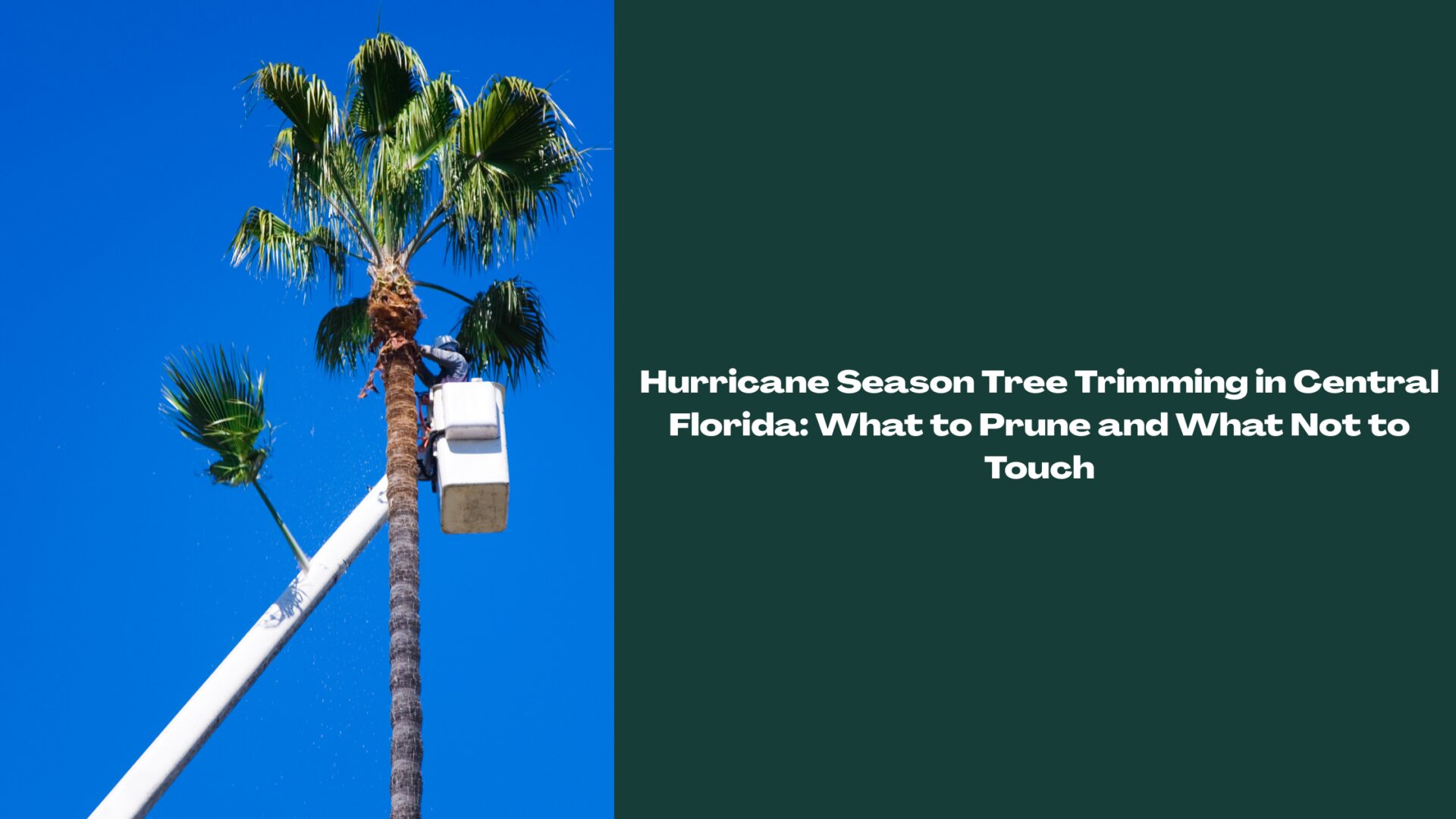
Hurricane season in Central Florida isn’t just about stocking water and batteries—your trees and your Central Florida landscaping company can help prevent some of the biggest “hidden” risks on the property before a storm hits.
Wind and saturated soil is a brutal combo here. The goal of hurricane-season tree trimming isn’t to make trees “hurricane-proof” (no one can promise that). The goal is to reduce obvious failure points—dead limbs, weak attachments, and hazardous hangers—so you lower the odds of damage to roofs, cars, fences, and people.
Why hurricane-season pruning matters in Central Florida
Central Florida storms often bring:
- Sudden wind gusts that snap dead or poorly-attached limbs
- Heavy rain that loosens root systems in soft soil
- Flying debris from weak branches (especially over driveways and roofs)
A smart pruning plan focuses on risk reduction: remove what’s most likely to fail first and leave the tree structurally stronger—not “skinnier.”
What to Prune Before Hurricane Season
Think: hazard removal and structural cleanup, not aggressive reshaping.
1) Dead, dying, or diseased limbs
This is the #1 storm projectile source. Dead wood is brittle and snaps easily.
Look for:
- No leaves when the rest of the tree is leafed out
- Bark peeling, fungus, or obvious decay
- Hollow spots, cracks, or dead stubs in the canopy
2) Hanging branches and storm-damaged wood
If a limb is already partially cracked or hanging, it’s a priority. Even smaller hangers can become dangerous in wind.
3) Branches rubbing/crossing each other
Rubbing creates wounds, which weakens limbs over time and can invite pests/disease—especially in warm, humid conditions.
4) Low branches over roofs, driveways, walkways, and pool screens
You don’t need to “raise” the canopy dramatically. But clearing critical zones reduces impact risk.
Good targets:
- Branches touching/overhanging shingles and gutters
- Limbs scraping pool enclosures
- Large limbs hovering over parked vehicles or main entry paths
5) Weakly-attached limbs (tight “V” unions)
Some branches form narrow angles that are more likely to split under load. A pro can identify these and remove/selectively reduce weight.
6) Palms: remove only dead/broken fronds
In Central Florida, palms are common in front yards and community entrances. For hurricane prep, palms generally need cleanup trimming, not heavy pruning.
Prune:
- Brown, dead fronds
- Broken fronds hanging down
- Loose seed pods/fruit stalks (where applicable)
What NOT to Prune: Common Hurricane-season Mistakes
These mistakes can increase storm damage and stress trees when you need them strongest.
1) Don’t “top” trees
Topping (cutting the top flat) creates weak, fast regrowth that snaps easily and can accelerate decay. It’s one of the most harmful pruning practices.
2) Don’t “lion-tail” (strip the interior canopy)
Removing too many inner branches leaves weight at the tips, turning limbs into whips in wind. Trees need balanced canopy distribution.
3) Don’t over-thin the canopy
A little selective thinning can help, but over-thinning makes sun and wind stress worse and can weaken the tree.
A good rule of thumb: if the tree suddenly looks “see-through,” it was probably too much.
4) Don’t remove healthy green palm fronds “just in case”
Over-pruning palms (especially removing green fronds) can weaken the palm and reduce its energy reserves. Hurricane prep is dead fronds only, plus hazards.
5) Don’t do major cuts right before a storm
If a storm is days away, focus only on obvious hazards. Big cuts can leave fresh wounds and extra stress.
6) Don’t cut near power lines yourself
If limbs are near service drops or primary lines, call a pro (and sometimes the utility). This is not a DIY zone—ever.
Best Timing for Hurricane-season Trimming
Atlantic hurricane season runs June through November, but the best time to prep is well before peak storm activity.
Ideal approach:
- Do risk-reduction pruning late winter through spring
- Do a light “hazard check” early summer
- Do only urgent hazard removal during active storm weeks
If you want the deeper “when to prune” breakdown, keep this post focused on hurricane prep and use your existing timing article as the dedicated timing resource.
Hurricane-prep pruning checklist for homeowners and HOAs
Use this as a quick scope guide when walking your property:
- Dead limbs anywhere in the canopy
- Hangers/cracked limbs from previous storms
- Branches touching rooflines, gutters, or pool screens
- Limbs over driveways, sidewalks, playgrounds, mail kiosks
- Tight “V” unions with heavy end-weight
- Palms: brown/dead fronds and loose seed pods
- Trees leaning more than usual after heavy rains
- Signs of decay at the trunk base or major branch junctions
HOA note: Document trees that overhang common areas and buildings. This helps with budgeting, approvals, and vendor accountability.
Central Florida tree trimming cost ranges (what most people pay)
Pricing depends on size, access, risk, and debris removal needs. These are general Central Florida ranges to set expectations:
- Small tree pruning: ~$150–$400
- Medium tree pruning: ~$400–$900
- Large canopy pruning / higher-risk access: ~$900–$2,500+
- Palm trimming (basic cleanup): ~$100–$300 per palm (often lower in bundles)
- Emergency removals / storm response: typically higher due to urgency and hazards
If you manage an HOA or multi-property portfolio, bundling work (multiple trees/palms) often reduces per-tree cost.
When you should call a pro (not DIY)
Call a professional if:
- Branches are near power lines
- Limbs are over your roof
- You see cracks, splits, or cavities
- A tree is leaning after rain
- You need a bucket truck, climbing, rigging, or traffic control
Storm prep should reduce risk—not create a new one.
Hurricane Season Tree Trimming FAQs in Central Florida
Not necessarily “every tree, every year,” but an annual hazard check is smart—especially for trees near roofs, pool cages, and high-traffic areas.
Selective thinning can help, but over-thinning can make trees weaker. The safest approach is targeted hazard removal and structural pruning.
Large oaks can be very stable, but risk depends on root health, decay, soil conditions, and canopy structure. If you see mushrooms at the base, cavities, or sudden lean, get it assessed.
Avoid heavy palm pruning. Removing healthy green fronds can weaken the palm. Stick to dead fronds and hazards.
Ideally weeks to months before peak storm season. Pros book up fast in late spring and early summer.
Ready to reduce storm risk on your property?
If you’re in Clermont, Davenport, Haines City, Four Corners, Horizon West, Winter Garden, or nearby areas, hurricane-season tree trimming is one of the most practical ways to reduce preventable damage.
Call (863) 582-2168 or Request a quote and we’ll recommend a risk-focused pruning plan based on your trees, your property layout, and the season.