
New Construction Irrigation: Why Zones Fail After Move-In (and How to Fix It)
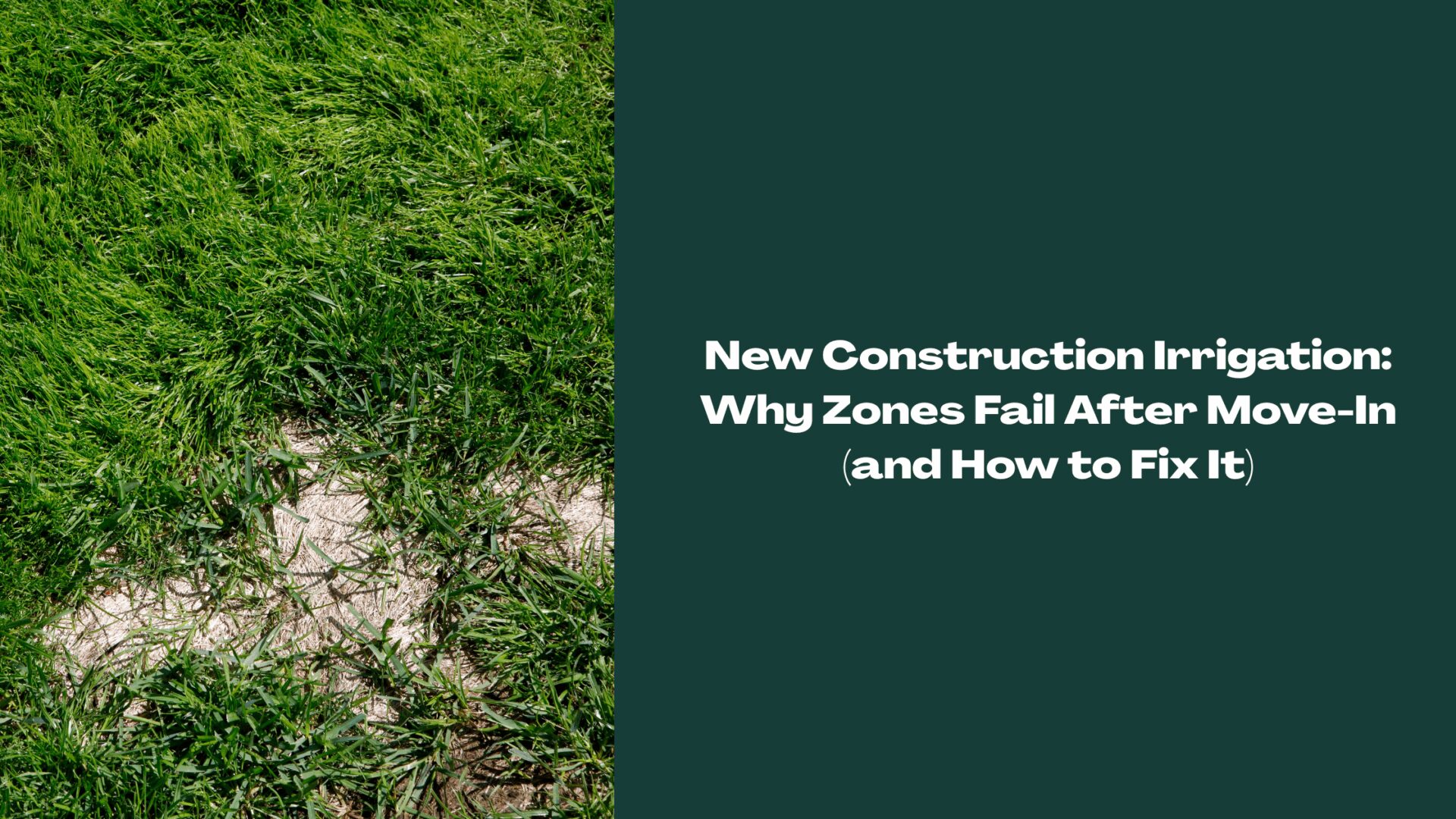
New construction irrigation often looks “fine” at the final walkthrough—then problems show up after you move in. Within the first few weeks, homeowners notice dry strips that don’t match sun exposure, soggy corners near sidewalks, or sprinkler heads that spray the driveway instead of the lawn. And because new lawns and landscaping are still establishing, irrigation mistakes show up fast as brown spots, fungus pressure, and thin turf.
The good news: most post-move-in irrigation problems are fixable without ripping everything out. The key is diagnosing the zone behavior (coverage, pressure, and programming) instead of reacting by turning up watering across the whole yard.
If you want a professional fix—head alignment, nozzle swaps, pressure troubleshooting, and controller programming—we offer irrigation installation repair for new construction homes. If you’re dealing with broader new-home landscaping, we provide professional new construction landscaping in Central Florida.
Why New Construction Irrigation Problems Show Up After Closing
Builders install irrigation systems quickly across many lots. That doesn’t mean the system is “bad”—but it often means it wasn’t tuned for your yard conditions after sod, settling, and real-world usage.
Here’s what changes after move-in:
- Sod and landscaping establish and demand consistent coverage
- Soil settles and heads become buried or tilted
- Plant growth blocks spray patterns within weeks or months
- Seasonal weather shifts require different watering schedules
- Homeowner preferences (bed changes, planting, edging) alter the irrigation needs
In other words, what passed inspection may still be underperforming. Now let’s get specific.
7 Common Reasons Zones Fail After Move-In
1) Coverage gaps and misaligned heads
This is the #1 issue we see. Heads may run, but water doesn’t land where it needs to.
Symptoms:
- Dry patches in “random” patterns
- One side of a zone looks great, the other fades
- Edges dry out first (especially near sidewalks and driveways)
Fix: head alignment, arc adjustment, and making sure the spray reaches turf—not pavement.
2) Wrong nozzles for the space
Nozzles determine how much water is applied and how far it throws. If the nozzle type or radius is wrong, coverage will never be consistent.
Symptoms:
- One section gets hammered with water while another stays dry
- Misty spray that blows away in wind
- Runoff before the turf absorbs
Fix: match nozzle to the distance and layout; use the correct pattern (quarter/half/full) and radius.
3) Low pressure or pressure loss
Pressure issues can be subtle. A zone may “work” but throw distance is shorter than intended.
Symptoms:
- Heads that used to reach now fall short
- Weak spray from several heads on the same zone
- Zone coverage changes when another zone runs (or when household water is used)
Fix: pressure troubleshooting, leak checks, and ensuring the zone isn’t overloaded.
4) Mixed heads on the same zone (sprays + rotors)
This is a classic performance killer. Different heads apply water at different rates.
Symptoms:
- Some areas are swampy while others are dry
- Short run times help one area but starve another
- Turf looks uneven no matter what schedule you choose
Fix: separate head types by zone or convert to consistent matched precipitation components where possible.
5) Buried or tilted heads after settling or sod install
After sod installation and soil settling, heads can sink or tilt.
Symptoms:
- One head sprays into turf (creating a wet crater)
- Overspray increases because the head angle is wrong
- Coverage seems worse than it was on day one
Fix: raise heads to proper height, reset level, and ensure a clean vertical spray plane.
6) Programming that doesn’t match season, soil, or exposure
Many controllers are programmed with a generic schedule that isn’t updated.
Symptoms:
- Turf is soggy even in mild weeks
- Mushrooms/fungus pressure increases
- Watering runs at night or late evening
- Brown spots appear even though “it waters a lot”
Fix: seasonal schedule changes, early-morning watering windows, and cycle/soak for sloped areas to prevent runoff.
7) Valves, wiring, or drip line issues
Not every problem is above-ground.
Symptoms:
- A zone won’t turn on (or won’t shut off)
- One section is completely dead while others are fine
- Drip beds look dry even though the system runs
Fix: valve diagnostics, wiring checks, and verifying drip lines are delivering water at emitters.
Quick DIY Diagnosis (15 Minutes, No Tools)
Before you change runtimes, do this quick check. It tells you whether you have a coverage problem or a schedule problem—and those are not the same fix.
Step 1: Run each zone for 2–3 minutes and watch
- Are heads popping up fully?
- Is spray hitting turf or pavement?
- Do you see obvious gaps where no water lands?
- Are any heads misting or sputtering?
Step 2: Look for these “tells”
- Dry strip between heads = spacing/radius issue
- Overspray on driveway/sidewalk = arc/radius mis-set
- One weak head + strong others = clogged nozzle or damaged head
- Several weak heads = pressure issue
- Soggy corner = head aimed wrong, broken line, or low spot + overwatering
Step 3: Check the controller basics
- Start times (too many start times = overwatering)
- Run times (consistent with head type?)
- Watering time of day (early morning is best)
- Rain sensor (if present) functioning?
If your yard has dry spots and wet spots at the same time, that’s usually coverage and/or mixed head types—not “needs more water.”
Fixes That Actually Work (Without Overwatering Everything)
Most homeowners try the same “fix” first: increase runtime. That often makes the wet areas worse while the dry areas still don’t improve.
Here’s the better order of operations:
- Correct obvious head alignment + arc
- Replace clogged/damaged nozzles
- Match nozzles to the distance
- Correct head height and leveling
- Address pressure issues if multiple heads are weak
- Then adjust schedule based on weather and lawn response
This sequence prevents water waste and protects new sod/landscaping.
For properties that need professional tuning and repairs, explore our professional irrigation repair services.
When to Call a Pro (What We Check on Site)
If you’ve run zones and you still can’t get consistent results—or you’re losing sod—get a zone audit. A proper visit typically includes:
- Full zone coverage review (not just “system turns on”)
- Head type confirmation + nozzle matching
- Arc/radius adjustments + head leveling
- Pressure evaluation and leak checks
- Controller programming aligned to season and site exposure
- Recommendations for zone corrections (if mixed heads create chronic issues)
This is especially valuable for HOA standards and new build communities where appearance expectations are high and turf loss becomes expensive.
How This Impacts Sod and Landscaping (Don’t Ignore It)
New construction irrigation issues don’t stay “just irrigation.” They trigger:
- New sod failure (dry strips, seam separation, thin turf)
- Fungus pressure from overwatering to compensate
- Weed invasions where turf thins
- Plant stress in beds when drip or sprays aren’t delivering correctly
- Higher water bills from waste and overspray
And if the “builder-grade” landscape needs improvement beyond irrigation, explore our professional new construction landscaping services.
Schedule Irrigation Repair or a Zone Audit
If your new home’s irrigation is causing brown spots, soggy corners, or water waste, Florida Landscape Co. can diagnose the system and fix the real issue—coverage, pressure, or programming—so your lawn and landscaping can establish properly.
Call us today at (863) 582-2168 or schedule a irrigation repair from Florida Landscape Co.
FAQ: New Construction Irrigation in Central Florida
Because runtime doesn’t guarantee coverage. Misaligned heads, wrong nozzles, low pressure, or spacing issues can leave areas dry while other areas get too much water.
Not first. Increasing runtime often worsens soggy areas and fungus pressure. Fix coverage gaps and head settings before adjusting schedule.
If multiple heads on the same zone are weak or throw distance is much shorter than expected, pressure loss is likely. A pro can test pressure and check for leaks or overloaded zones.
Leaving the controller schedule on a generic program without seasonal adjustments. Central Florida needs schedule changes based on weather and site conditions.
Yes. We perform zone audits, repairs, nozzle matching, head leveling, and controller programming to improve performance without unnecessary replacements.