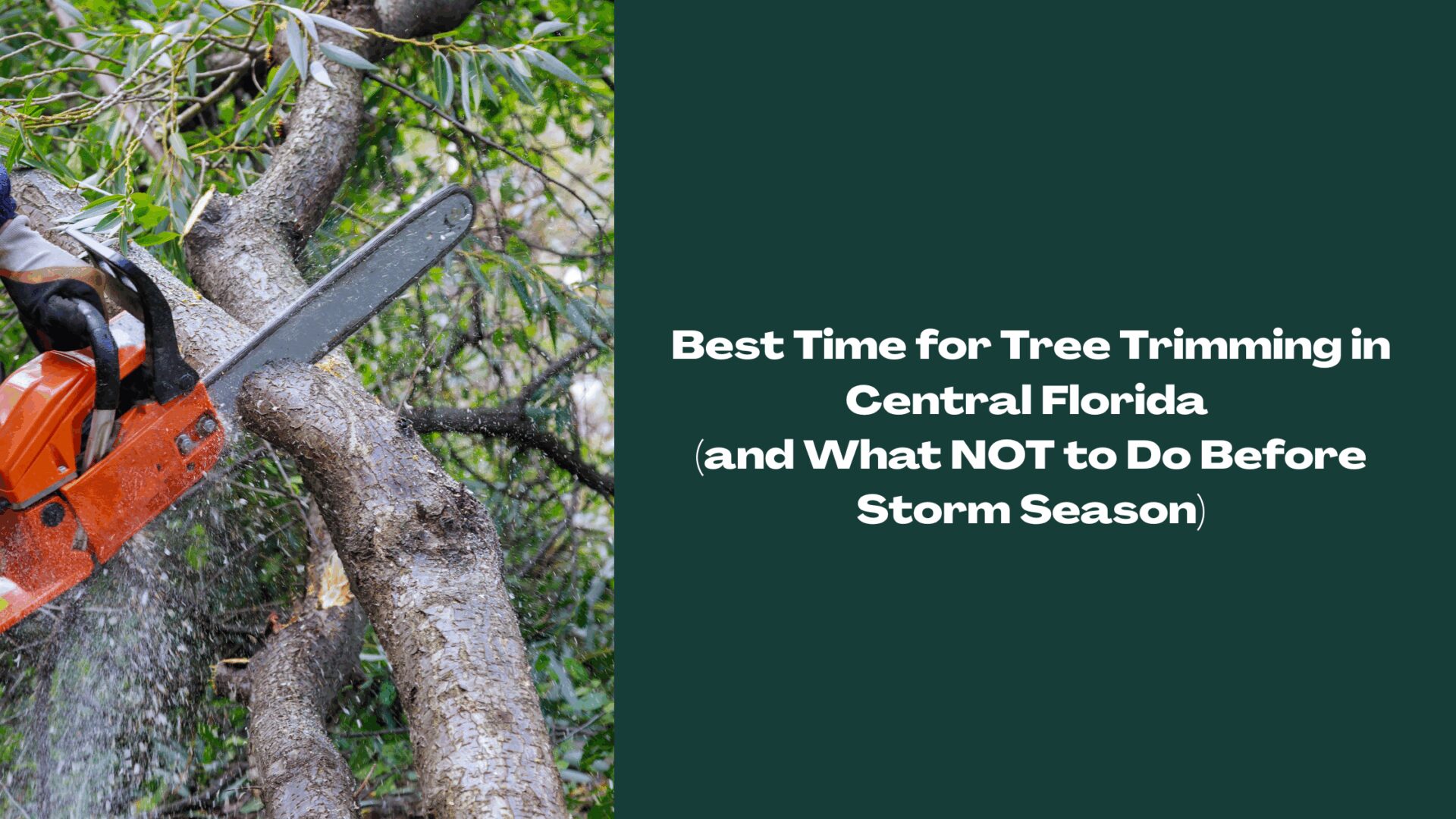
Best Time for Tree Trimming in Central Florida (and What NOT to Do Before Storm Season)
Best time for tree trimming in Central Florida depends on what type of tree you have, the goal of the pruning, and the season you’re heading into—especially when storm season is around the corner. Done at the right time, tree trimming improves safety, reduces storm risk, and keeps your property looking clean and HOA-ready. Done at the wrong time (or done too aggressively), pruning can actually make trees more vulnerable to high winds and breakage.
If you’re a homeowner looking for routine care, the goal is usually simple: remove dead or hazardous limbs, improve structure, and maintain clearances over roofs, driveways, and walkways. If you manage an HOA or commercial property, timing matters even more because you’re balancing resident expectations, budgets, vendor schedules, and seasonal growth patterns.
Below is a clear guide to the best timing for pruning in Central Florida—and the biggest mistakes to avoid before storm season.
For help with pruning, removals, and safe tree care, check out tree services page.
Why Timing Matters for Tree Trimming in Central Florida
Central Florida’s growth patterns are different from cooler climates. Trees and plants often grow for more months out of the year, and weather can shift quickly from mild to hot and rainy. Timing matters because trimming affects:
- Tree health and recovery: Trees need time to seal cuts and stabilize after pruning.
- Storm performance: Over-pruning creates weak regrowth and changes wind resistance.
- Appearance and maintenance: Proper cycles keep landscapes looking consistent (especially for HOAs).
- Safety: Dead limbs don’t care what month it is—hazards should be addressed immediately.
A good strategy is to separate pruning into two buckets:
- Routine pruning (planned, seasonal)
- Corrective/safety pruning (as-needed, any season)
The Best Time for Routine Tree Trimming (Most Homes & HOAs)
For many properties, late winter into early spring is a strong window for routine trimming and structural pruning. That’s when trees are generally under less active growth stress, and crews can shape and thin canopies before the heavy summer growth push.
Winter/early spring pruning benefits
- Cleaner visibility of the branch structure
- Better planning for clearance pruning (rooflines, driveways, sidewalks)
- Helps reduce messy mid-summer emergency calls
- Preps trees before the most intense heat and rain cycles
This doesn’t mean winter is the only time to trim. It’s simply a reliable window for routine pruning that supports healthier growth patterns and makes scheduling easier—especially for HOAs that want predictable maintenance cycles.
When light “maintenance pruning” is okay year-round
Some trimming can be performed at any time when it’s minor and targeted:
- Removing small dead twigs
- Clearing minor walkway interference
- Addressing low-hanging branches that create immediate clearance issues
- Tidying ornamental trees lightly without heavy canopy thinning
The key is not overdoing it in the wrong season—especially before storms.
What NOT to Do Before Storm Season
This is the section most homeowners (and unfortunately, some vendors) get wrong. In the months leading into storm season, it’s tempting to “trim everything back hard” so it looks tidy. But aggressive pruning right before high-wind season can create the exact conditions that lead to breakage.
Why “topping” trees makes storms worse
Tree topping is the practice of cutting the top of a tree back dramatically to reduce height. It often looks like a quick fix, but it creates long-term problems:
- It triggers fast, weak regrowth that snaps more easily
- It creates large wounds that the tree struggles to seal
- It disrupts natural structure and can increase wind failure risk
- It often leads to repeated “maintenance” because the tree grows back unevenly
If you hear terms like “top it off” or “cut it way back so we don’t have to come again,” that’s a red flag. Proper pruning focuses on structure and safety, not dramatic reductions.
Avoid over-pruning right before peak wind season
Over-pruning can:
- Thin canopy too much, stressing the tree
- Remove protective interior structure
- Shift the tree’s balance, making it more vulnerable in strong winds
- Encourage quick, weak growth during peak heat/rain periods
A better storm-season approach is:
- Remove dead, cracked, or hanging limbs
- Correct obvious hazards (branches over roofs, power lines—handled safely)
- Perform selective thinning only where needed
- Avoid “cosmetic heavy pruning” that strips the tree
If storm safety is your concern, ask for risk-based pruning—not “make it look small.”
Palms vs. Shade Trees: Different Rules
Central Florida properties often have a mix of palms and shade trees. They don’t behave the same way, and they shouldn’t be pruned the same way.
Palms
Palms are often over-pruned in Florida because homeowners want the “clean” look. But removing too many fronds can stress palms and look unnatural.
Good palm pruning focuses on:
- Removing dead/broken fronds
- Removing fronds that hang down excessively (when appropriate)
- Avoiding “lion tailing” (removing too much, leaving a tuft at the top)
Over-pruning palms doesn’t make them stronger—it often makes them look worse and more vulnerable.
Shade trees (oaks, maples, etc.)
Shade trees benefit from:
- Structural pruning that encourages strong branching
- Clearance pruning for roofs, driveways, and walkways
- Removing deadwood and crossing/rubbing branches
- Keeping canopy balanced rather than dramatically reduced
If you’re unsure what you have, a pro can identify the right approach quickly. This is where a reliable tree service matters: Tree Services in Central Florida.
Signs Your Trees Need Trimming Now (Regardless of Season)
Even if you’re aiming for a seasonal plan, some situations are immediate:
- Dead limbs (especially larger branches)
- Hanging branches after storms or heavy rain
- Branches touching the roof or scraping siding
- Low clearance over sidewalks/driveways (safety and access issue)
- Branches growing into each other (rubbing/crossing increases damage)
- Lean or cracking at major branch unions (structural warning sign)
- Obvious decay or hollowing near trunk/major limbs
If you see these, don’t wait for the “perfect month.” Safety issues should be addressed when discovered.
HOA & Commercial Tree Trimming Planning (Budget + Scheduling)
If you manage an HOA or a commercial property, tree trimming is one of those line items that can either feel controlled—or become chaotic. The difference is having a predictable cycle and clear scope standards.
What to include in HOA/commercial tree plans
- Defined pruning cycles (routine trimming vs. hazard-only visits)
- Entrance and common area priorities (visibility, signage clearance)
- Storm response expectations (what happens after a wind event)
- Reporting and recommendations (deadwood, removals, risk trees)
- Coordination with landscape maintenance (so shrubs, beds, and trees stay consistent)
If you’re comparing vendors for HOAs and commercial sites, keep tree scope clear and measurable. We provide professional landscaping services for HOAs and Commercial properties.
Get a Tree Trimming Quote in Central Florida
If your trees need trimming—or you want a plan that reduces storm risk without damaging your canopy—Florida Landscape Co. can help you prioritize the right cuts at the right time.
Call us today at (863) 582-2168 or contact Florida Landscape Co for a free tree inspection.
FAQ: Tree Trimming Timing in Central Florida
For routine pruning, late winter through early spring is often ideal. That said, safety trimming (dead limbs, hazards) should be done any time you notice an issue.
You should address deadwood and obvious hazards, but avoid aggressive pruning or topping right before peak storm months. Over-pruning can increase breakage risk.
It depends on the species and location. Many properties benefit from routine pruning every 1–3 years, with annual inspections for deadwood and hazards.
Over-pruning for appearance—especially topping or stripping canopies. Proper pruning focuses on structure, safety, and long-term health.
Yes. Florida Landscape Co. supports homeowners, HOAs, and commercial sites with trimming plans, hazard pruning, and ongoing landscape coordination.